
Last updated November 25, 2026
 Sweep & inspection
 Caps & crowns
 Flue relining
 Masonry repair
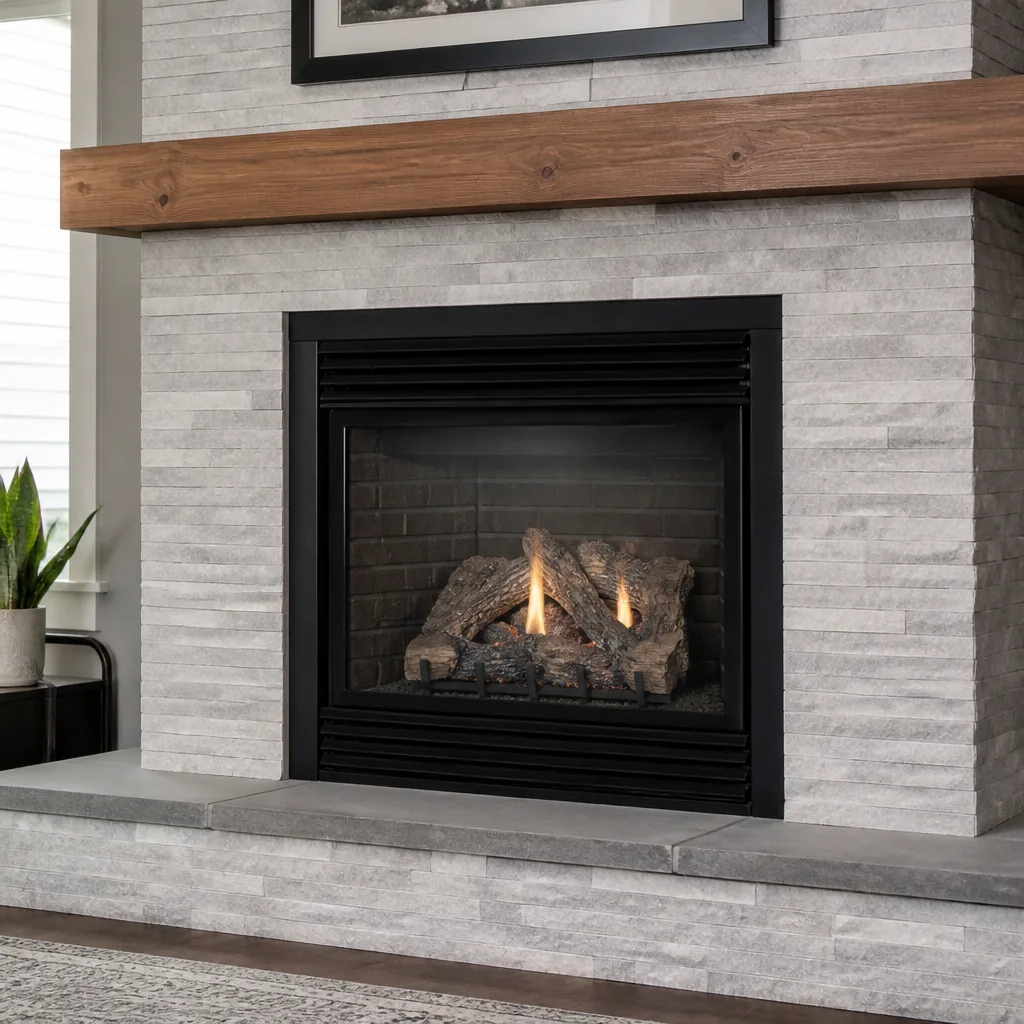 Gas fireplace service
Level 1 sweep and inspection to the NFPA 211 annual standard - flue, crown, cap, and flashing checked and photographed
Chimney sweep logs do not sweep chimneys. They loosen some creosote - which then falls where a brush and vacuum still have to collect it.
Chimney Sweep Maintenance Checklist for Richmond Hill Homeowners
The chimney cap is the first thing to fail in Queens winters, and the last thing most homeowners check. By the time water damage shows up on the ceiling, it’s been failing for two seasons. Most chimney advice floating around online was written for a national audience and says the same four things: sweep annually, burn seasoned wood, check your smoke detectors, call a pro. None of that tells you what to actually look at on a 1920s brick chimney in Richmond Hill after a winter of freeze-thaw cycling. This guide gives you a practical checklist tied to the housing stock and conditions here – room by room, season by season, with a log you can keep so you stop guessing year to year. You’ll learn what to inspect, what “acceptable” looks like versus “needs repair,” and when to stop looking and call someone.
Quick Answer
A chimney maintenance checklist for a Richmond Hill home should cover three zones every year: the exterior (cap, crown, brick face, mortar joints), the firebox and smoke chamber (damper, parging, joint integrity), and the flue liner (clay tile condition, creosote buildup, proper sizing). Pair a professional annual sweep and inspection with two homeowner walk-throughs – one in fall before burning season and one in spring after your last fire – and log the results so you can track changes over time. Richmond Hill’s freeze-thaw winters make the exterior the highest-risk zone, and it’s the one most homeowners never check.
Styles & brands we work with
- Sweep & inspection
- Caps & crowns
- Flue relining
- Masonry repair
- Gas fireplace service
Table of Contents
- Why Richmond Hill Chimneys Fail Differently
- Exterior Checklist: What to Look For From the Ground
- Interior Checklist: Firebox, Damper, and Smoke Chamber
- Liner Checks: What a Flashlight Can and Can’t Tell You
- Season-by-Season Maintenance Schedule
- Appliance-Specific Checkpoints: Wood, Gas, and Pellet
- Building a Maintenance Log That Actually Helps
- Common Mistakes to Avoid
- When to Call a Professional
- Frequently Asked Questions
Why Richmond Hill Chimneys Fail Differently
Richmond Hill sits in a climate that cycles through freezing and thawing dozens of times each winter. That cycle is what breaks brick chimneys. Water gets into a hairline crack in the mortar or the crown, freezes overnight, expands, and pushes the masonry apart a little more. It thaws the next afternoon, water seeps deeper, and the process repeats. Over a few seasons, a crack you couldn’t see becomes spalling brick and crumbling mortar joints.
The housing stock here amplifies the problem. Many Richmond Hill homes were built in the first half of the twentieth century, when chimneys were laid up with clay tile liners and brick that has since absorbed decades of moisture. Older brick is more porous than modern material, and clay tile liners crack under thermal stress, especially when a hot fire meets a cold flue on a January morning. Add the fact that many of these chimneys were originally built for coal or unlined fireplaces and later adapted for wood or gas, and you get flues that are undersized or unlined for what they’re now venting.
That’s why a checklist built for a new suburban house doesn’t translate. A Richmond Hill homeowner needs to watch for water intrusion indicators first, liner integrity second, and creosote accumulation third. In our experience, the exterior failures get ignored longest because they’re out of sight. Interior issues at least give you smoke rollout or a draft that feels off. A cap that’s been loose for two seasons gives you nothing until the ceiling stain appears.
If you want the foundation piece done right, start with a proper Chimney Sweep Richmond Hill visit that includes inspection, not just brushing. The sweep tells you what’s in the flue. The inspection tells you what’s happening to the chimney itself.
Exterior Checklist: What to Look For From the Ground
You don’t need a ladder for most of this. Stand back from the chimney on a clear day with binoculars and work through the list. If anything on it concerns you, note it and have a professional confirm from the roof – steep-roof and height work is not a homeowner job.
The cap
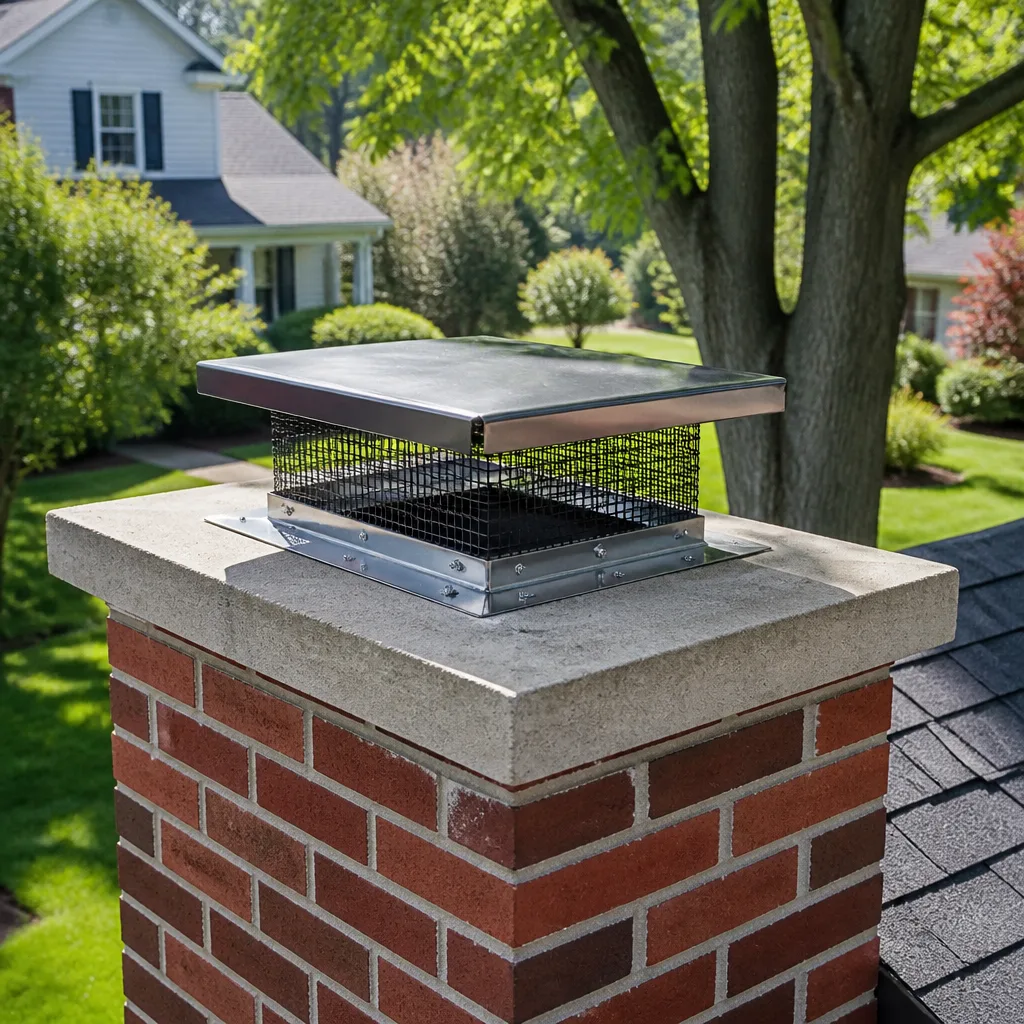
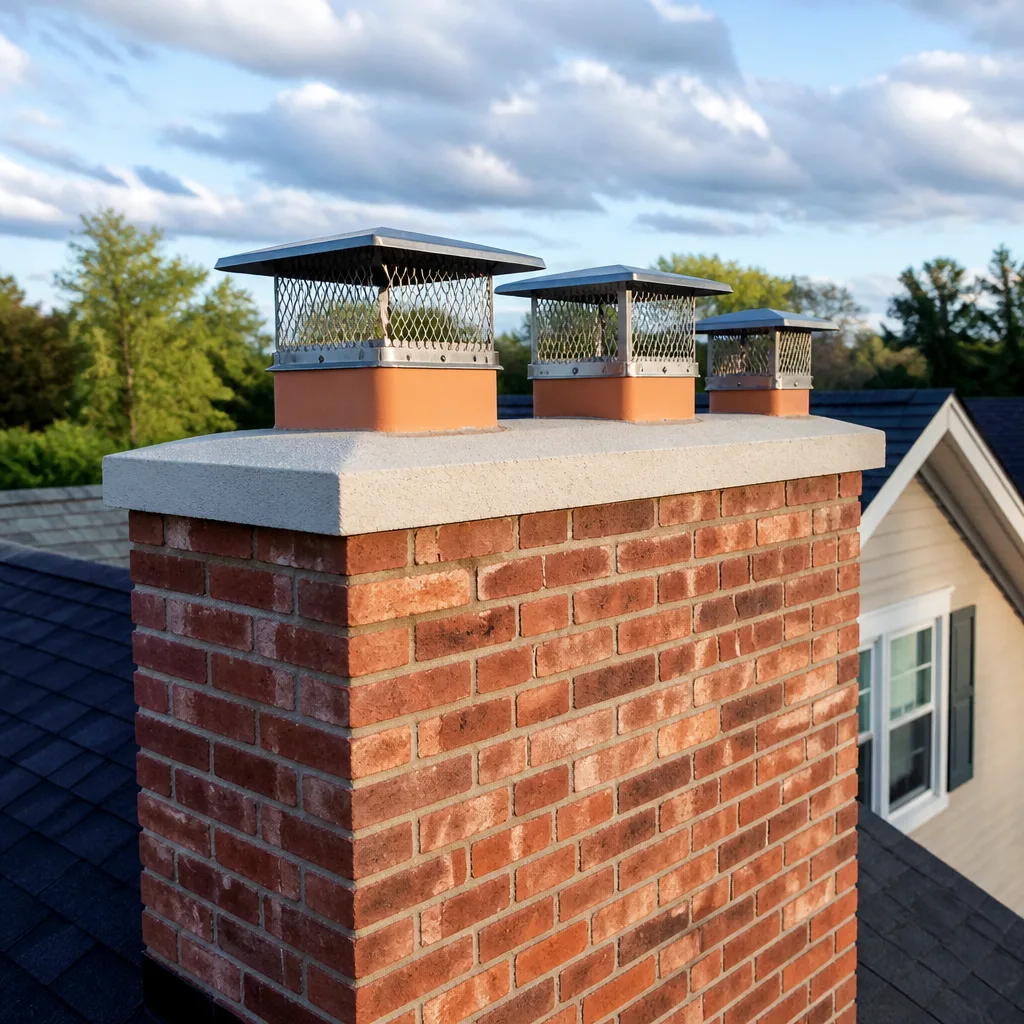
The cap is the metal or masonry cover at the top of the flue. Its job is to keep rain, snow, birds, and squirrels out while letting smoke escape. Check that it’s still attached, that the mesh screen isn’t torn, and that the top plate isn’t rusted through. A loose or missing cap is the single most common exterior failure we find on Richmond Hill chimneys, and it’s the one that lets water straight into the flue.
The crown
The crown is the sloped concrete or mortar cap that sheds water away from the chimney top. Look for cracks wider than a hairline, a crown that’s separated from the flue tiles, or a crown that’s flat or sloping toward the chimney rather than away. A failed crown channels water into the masonry instead of off it.
Brick and mortar
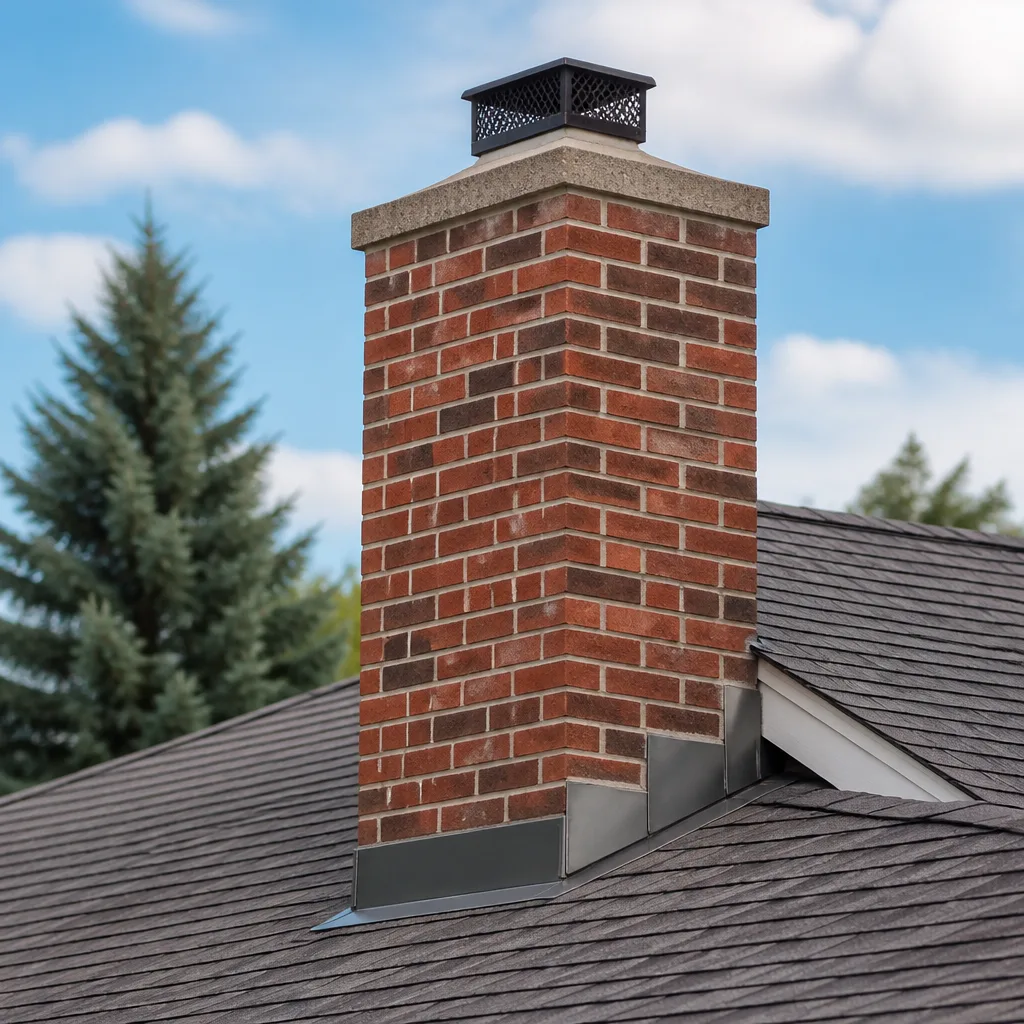
- Spalling brick: the face of the brick flaking off in layers. This is the signature of freeze-thaw damage and means water is inside the brick.
- Mortar joint erosion: joints that are recessed more than about a quarter inch, crumbling, or missing in patches. Repointing restores the weather seal before the brick takes the damage.
- Efflorescence: the white, powdery staining you sometimes see on the brick face. It’s mineral salts pushed to the surface by water moving through the masonry. It’s not cosmetic – it’s a water intrusion indicator. It can also mean the chimney is doing its job of drying out, but if you see it, water is getting in somewhere.
- Rust staining: streaks below the cap or flashing usually mean a metal component is corroding and water is riding down the face.
For the cap and crown specifically, prompt repair is cheaper than waiting. chimney cap & crown work is one of the most cost-effective things a homeowner can do before a small failure becomes a structural one. If you’re seeing water damage inside already, that’s usually a sign to look at chimney repair rather than just a top-of-stack fix.
Interior Checklist: Firebox, Damper, and Smoke Chamber
The interior checklist is where most homeowners miss the important stuff because they don’t know what “acceptable” looks like. Here’s how to read it.
Firebox joints
The firebox is the brick box where the fire sits. Look at the mortar joints between the firebricks. Acceptable: thin, intact, gray-tan mortar with no gaps. Needs repair: joints that are recessed, crumbling, or missing mortar entirely. Hairline cracks in the firebrick itself are usually fine. Cracks wider than about the thickness of a nickel, or a brick that’s cracked corner to corner, need professional attention. Smoke that seeps through a firebox joint can make its way into the wall cavity.
Damper function and seating
The damper is the metal plate above the firebox that opens and closes the flue. Open it fully and look up. It should open smoothly, seat flush when closed, and show no daylight around the edges when you look up from the firebox with the damper closed. If it doesn’t seat, you’re losing heat up the flue when the fireplace isn’t in use. If it’s stuck open, you’re giving warm room air a straight path out of the house all winter. If it’s rusted or warped, it may need replacement.
Smoke chamber parging
The smoke chamber is the tapered space between the damper and the flue. Acceptable: a smooth, angled surface that guides smoke into the flue. Needs repair: rough, exposed brick joints, jagged edges, or a corbelled step pattern where each brick course overlaps the one below. Rough smoke chamber surfaces slow the smoke and let it cool, which causes draft problems and gives creosote more surface to collect on. Parging is the process of smoothing that surface with a refractory mortar. It’s a job for a chimney specialist, not a general handyman.
Clearances
Check that combustibles – firewood, cardboard, curtains, furniture – are at least three feet from the firebox opening. Check the hearth extension and that the hearth is in good condition with no cracks that could let embers through. Check that the chimney has proper clearance from any wood framing in the attic, if you can see it.
Liner Checks: What a Flashlight Can and Can’t Tell You
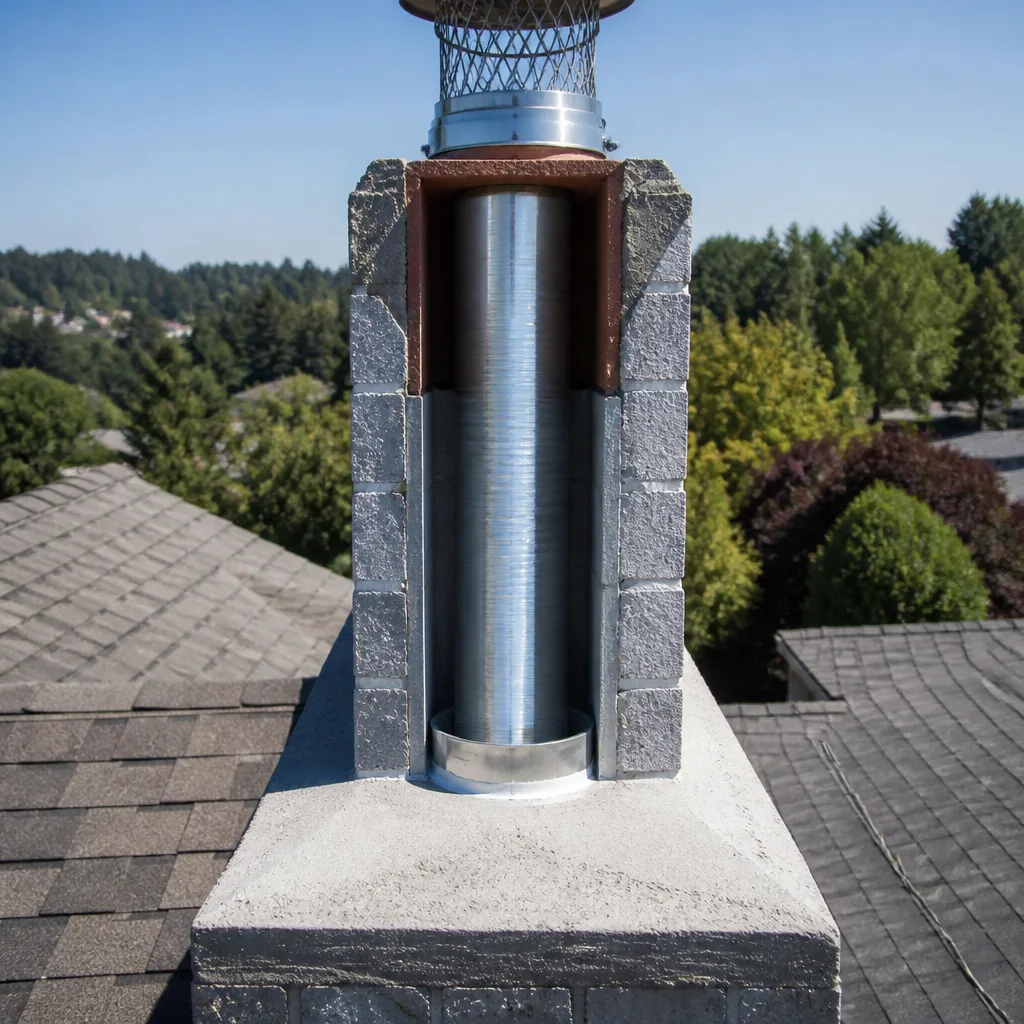
The flue liner is the clay tile or metal lining inside the chimney that carries smoke and gases up and out. If it’s cracked or missing, combustion gases can escape into the house. You can do a limited assessment from below with a strong flashlight – but be clear about the limits of that check.
What a flashlight from below can show you
- Number of tiles visible. Look up the flue from the firebox with the damper open. Note how many tile lengths you can count and whether the tiles are smooth and uniform inside.
- Visible cracks and gaps. Gaps at the tile joints are common and not always a problem, but a tile that’s shifted out of line or a visible vertical crack in a tile face is worth flagging.
- Heavy or flaky buildup. Glossy, tar-like creosote at the top of the flue is stage-three creosote and needs professional removal. Flaky, brittle buildup is stage two. Light soot and ash are stage one.
- Efflorescence or staining inside the flue. White staining inside the flue means water is getting in – usually from a failed cap or crown.
- Offset or missing tile. If you can see a place where a tile is entirely missing or the flue offsets abruptly, that’s a flag.
What a flashlight cannot show you
A flashlight from below doesn’t show you the upper third of the flue clearly. It doesn’t show you the back side of the tiles. It can’t tell you if a joint has failed behind the visible face, or if there’s a hairline crack on the far side of the flue that opens under heat. That’s what a camera inspection is for – a video camera on a flexible rod run the length of the flue, recording what it sees. A camera inspection is the only way to know the actual condition of the liner above eye level.
When the liner needs attention
If the liner is cracked, missing tiles, or badly out of round, it can sometimes be restored with HeatShield ceramic resurfacing – a method that smooths and seals the inside of the flue without demolition. It’s not right for every flue; it depends on the extent of the damage. When the liner is beyond resurfacing, a DuraFlex flexible liner can be sized and installed to fit the actual flue, including older or irregular chimneys where a rigid liner wouldn’t work. We work with DuraFlex and HeatShield because these are the same professional-trade materials chimney engineers specify for the job, not hardware-store substitutes. If you want to know whether a liner is worth saving or relining, that’s the question a proper camera inspection will answer.
Season-by-Season Maintenance Schedule
This is the calendar version of the checklist. Pin it to the fridge or tape it inside the cabinet where you keep the chimney log.
Fall – before the first fire
- Schedule the annual sweep and inspection. Do this before you light the first fire of the season.
- Walk the exterior with binoculars. Note the cap, crown, brick face, and mortar joints.
- Open the damper and look up with a flashlight.
- Inspect the firebox joints.
- Check the smoke and carbon monoxide detectors.
- Have the flue camera-inspected if it’s been more than two years since the last inspection or if you noted anything concerning.
During burning season
- Burn seasoned wood only – split, stacked, and dried at least a year. Green wood produces more creosote.
- Don’t overload the firebox. Small, hot fires produce less creosote than large, smoldering ones.
- Keep the glass door or screen closed when in use unless the fireplace is designed for open burning.
- Note any smoke rollout into the room, odd smells, or a draft that’s weaker than usual. These are early indicators of a problem.
Spring – after the last fire
- Close the damper. If it doesn’t seat flush, note it for the sweep.
- Look for staining on the ceiling or walls near the chimney – the earliest sign of water intrusion.
- Check the attic for water staining around the chimney penetration, if accessible.
- Note the number of fires roughly, and the type of wood you burned, for the log.
Summer – deep-check season
- Any exterior repair – cap, crown, repointing – is easiest to plan and complete before fall demand.
- Get a camera inspection done now rather than waiting for the fall rush.
- If a liner resurfacing or relining is needed, plan it before burning season.
Appliance-Specific Checkpoints: Wood, Gas, and Pellet
The chimney’s job is the same – get the smoke and gases out – but the checkpoints differ by what’s venting through it. Here’s what to look at for each.
Wood-burning fireplaces and inserts
- Creosote accumulation: the primary concern. Check for buildup after every cord of wood burned.
- Firebox joint integrity: as described in the interior checklist above.
- Damper seating: critical for heat retention.
- Spark screen or glass door: in good condition, no cracks.
- Chimney cap mesh: clear of soot and debris.
Gas log inserts
- Flue sizing: gas logs vent differently than wood and some setups are vent-free (no chimney required). If yours vents to the flue, the flue needs to be properly sized for the appliance.
- No creosote to worry about, but the flue still needs periodic inspection for debris and nesting animals.
- Check the log set for cracks or deterioration.
- The burner and pilot assembly need periodic service – that’s an appliance tech call, not a chimney call.
- A gas odor near the fireplace is a call-your-provider-right-now situation, not a checklist item.
Pellet stoves
- Pellet stoves produce less creosote than wood but still produce ash that can clog a flue.
- The vent pipe needs to be checked for ash buildup, especially the cleanout tee and any horizontal runs.
- Soot and fly ash can accumulate in the vent terminal – check it seasonally.
- The flue cap and vent termination should be clear of snow and ice, especially in cold snaps.
When wood, gas, and pellet appliances share the same flue, the risk goes up sharply. The flue needs to be sized for the combined load and each appliance needs its own proper connection. If you’re not sure how your appliances are configured, that’s the first thing to have checked.
Building a Maintenance Log That Actually Helps
The single most useful thing a homeowner can do is keep a log. A written log means you carry the history forward instead of guessing year to year. Here’s what to record:
- Date of each sweep and inspection. This is the tripwire for the annual cadence.
- Who did the work. The company name and if a technician gives you a name, note it.
- What was found and what was done. “Swept flue, one cracked tile visible at second joint, camera inspection performed, no repair recommended” is a useful entry. “Serviced chimney” is not.
- Materials used. If you had a cap installed, note the brand. If a crown was repointed, note the mortar type. If a liner was resurfaced, note whether it was HeatShield and when. This is your record of what’s in your chimney.
- Any recommended follow-up. If the tech recommends a repair “next year,” write it down with a note about why.
- Photos. Ask for the photos from the camera inspection and keep them. Comparing last year’s photos to this year’s tells you whether a small crack is stable or growing.
Photograph the exterior of the chimney once a year from the same spot. It sounds fussy. It takes thirty seconds. It gives you a native record of what the brick looked like when it was fine, so you can spot a change early.
Common Mistakes to Avoid
- Skipping the exterior check because it doesn’t seem to matter. On Richmond Hill’s older masonry chimneys, the exterior is the first thing to fail. A cap that’s been loose for two winters lets water in long before you notice anything inside.
- Treating the annual sweep as a full inspection. A sweep brushes the flue. An inspection assesses the whole system. If your last service was “sweeping only,” you don’t have an inspection history.
- Burning green or unseasoned wood to save money on the cord. It produces more creosote and creates more work and risk than the savings justify. Seasoned wood costs more per cord and less per season.
- Reading efflorescence as cosmetic. White staining on the brick face means water is moving through the masonry. It’s telling you where the water is getting in.
- Believing the cap only keeps out rain. It also keeps out birds, squirrels, and wind-blown debris. A missing cap on a Richmond Hill chimney can mean a nest in the flue by spring.
- Accepting a repair recommendation without seeing the evidence. A camera inspection produces a recording and photos. Any reputable chimney technician should be willing to show you what they found – not just tell you.
- Waiting until the first cold week to book the annual service. The fall window is busy. Booking in late summer or early fall gets you a slot and gets the chimney ready before you need it.
When to Call a Professional
Some checklist items are homeowner work – opening the damper, photographing the exterior, checking for ceiling stains. Some are not. Call a professional if you see any of the following:
- Smoke rolling out of the fireplace into the room when the fire is burning.
- Any staining, drip marks, or soft spots on the ceiling or wall near the chimney.
- A cap that’s loose, missing, or visibly rusted through.
- Crown cracks wider than a hairline, or a crown that’s separated from the flue.
- Brick spalling or mortar joints eroded more than about a quarter inch.
- Visible cracks, missing tiles, or an offset in the flue liner.
- Any heavy, glossy, or tar-like creosote visible at the top of the flue.
- A carbon monoxide detector that ever reads above zero. Leave the house and call 911 first.
Chimney Sweep Richmond Hill offers free estimates in Richmond Hill – call (888) 846-8349. We answer 24/7. Fast dispatch from 7am to 7pm, Sunday through Friday. Before we recommend any repair, we show you what we found – documented, specific, and priced to match the actual problem. One company handles it all: sweep, inspect, repair, reline.
Frequently Asked Questions
Once a year, or after every cord of wood burned, whichever comes first. On older Richmond Hill chimneys, an annual sweep paired with a full inspection is the minimum. If you use the fireplace heavily through the winter, a mid-season check of the flue for creosote buildup is worth considering. Call (888) 846-8349 for an exact quote – estimates are free.
A sweep and inspection visit is priced per job by written estimate, based on flue condition, number of flues, and whether a camera inspection is needed. There’s no flat one-size price because no two chimneys in Richmond Hill’s older housing stock are alike. The estimate is free, and the written estimate sets the final price. Call (888) 846-8349 for an exact quote – estimates are free.
Not always – and that’s the important part. A cracked or pitted clay tile liner can often be restored with HeatShield ceramic resurfacing instead of replaced. The camera inspection tells you which path is right, and the technician should be able to show you the evidence. If liner damage is limited and localized, resurfacing is less invasive and less expensive than a full reline. If the clay is missing tiles or badly out of round, a DuraFlex flexible liner may be the better option. Call (888) 846-8349 for an exact quote – estimates are free.
Creosote accumulates in the flue, and creosote is what fuels chimney fires. A small amount is normal; heavy buildup is the risk. On a Richmond Hill chimney that also gets freeze-thaw cycling every winter, skipping the annual visit also means missing the exterior check that catches a failed cap or crown before water damage spreads into the ceiling. Nothing about a skipped season is safe by default. Call (888) 846-8349 for an exact quote – estimates are free.
No, and no honest chimney technician will claim otherwise. A flashlight from the firebox shows you the bottom third of the flue. The upper flue, the back side of the tiles, and the liner above eye level need a camera inspection. What a homeowner can do from inside is note visible problems – smoke rollout, a damper that won’t seat, cracks in the firebox mortar – and use those as a starting point for a professional visit. Call (888) 846-8349 for an exact quote – estimates are free.
A sweep is the physical brushing out of the flue. An inspection is the assessment of the whole system – cap, crown, brick, mortar, firebox, damper, smoke chamber, and flue liner. Richmond Hill homeowners need both. A sweep without an inspection leaves the structural questions unanswered, and an inspection without a sweep leaves the creosote in the flue. When you book, ask what’s included. Call (888) 846-8349 for an exact quote – estimates are free.
The Bottom Line
A Richmond Hill chimney needs a checklist built for the conditions here – freeze-thaw winters, older masonry, and a housing stock where the exterior is the highest-risk zone. Walk the exterior twice a year. Open the damper and look up before each season. Book the annual chimney sweep before the fire is lit. Camera-inspect the liner whenever the flashlight check leaves questions open. Keep a log of date, findings, materials, and photos, so next year’s check is a comparison, not a fresh start. Nothing in this guide is a substitute for a documented professional inspection, and no repair should be recommended without evidence you can see.
When you’re ready to book, call (888) 846-8349. We answer 24/7. Fast dispatch from 7am to 7pm, Sunday through Friday. The estimate is free, and the price is set per job by the written estimate. We specify the same materials professional chimney engineers recommend – DuraFlex, HeatShield, Copperfield, Olympia Chimney, and Famco – because your flue isn’t the place to cut corners. Our technicians have up to 15 years of experience.
Written by the team at Chimney Sweep Richmond Hill.
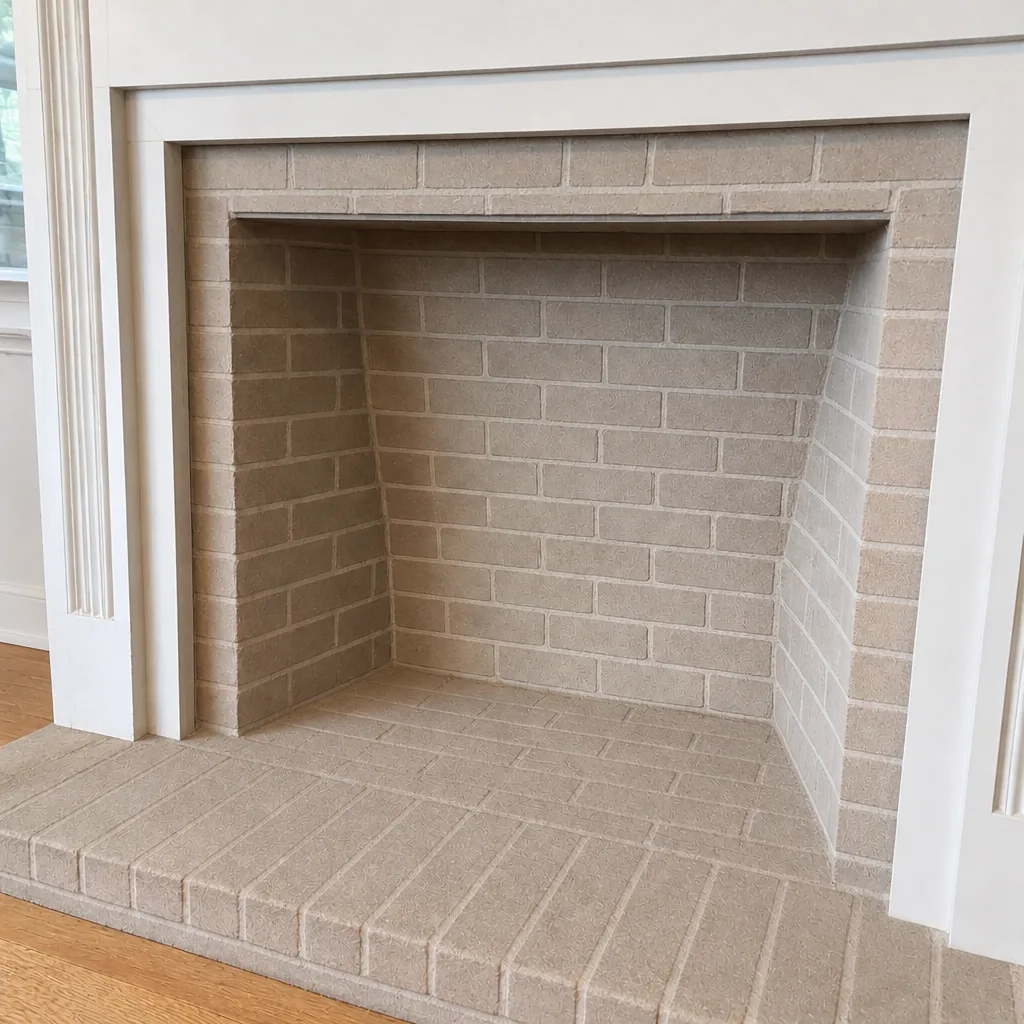
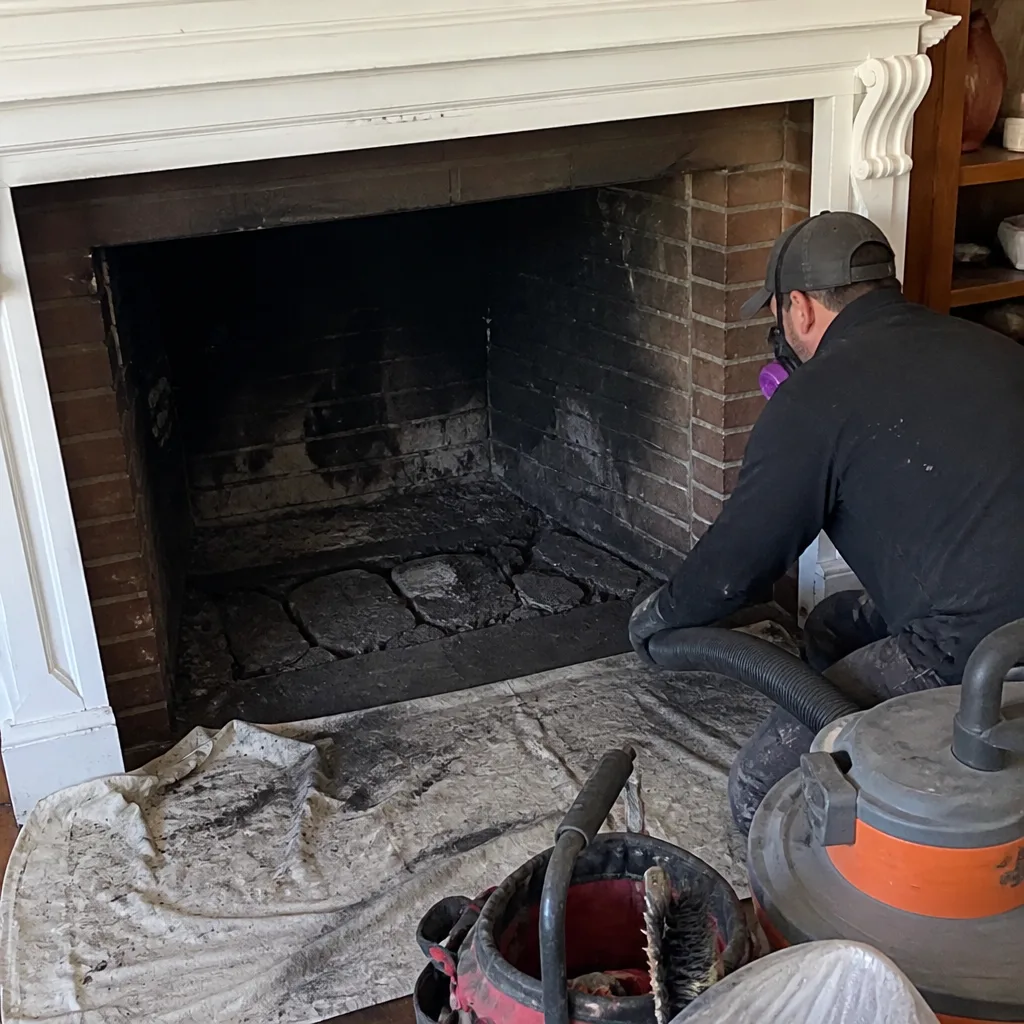
See the difference
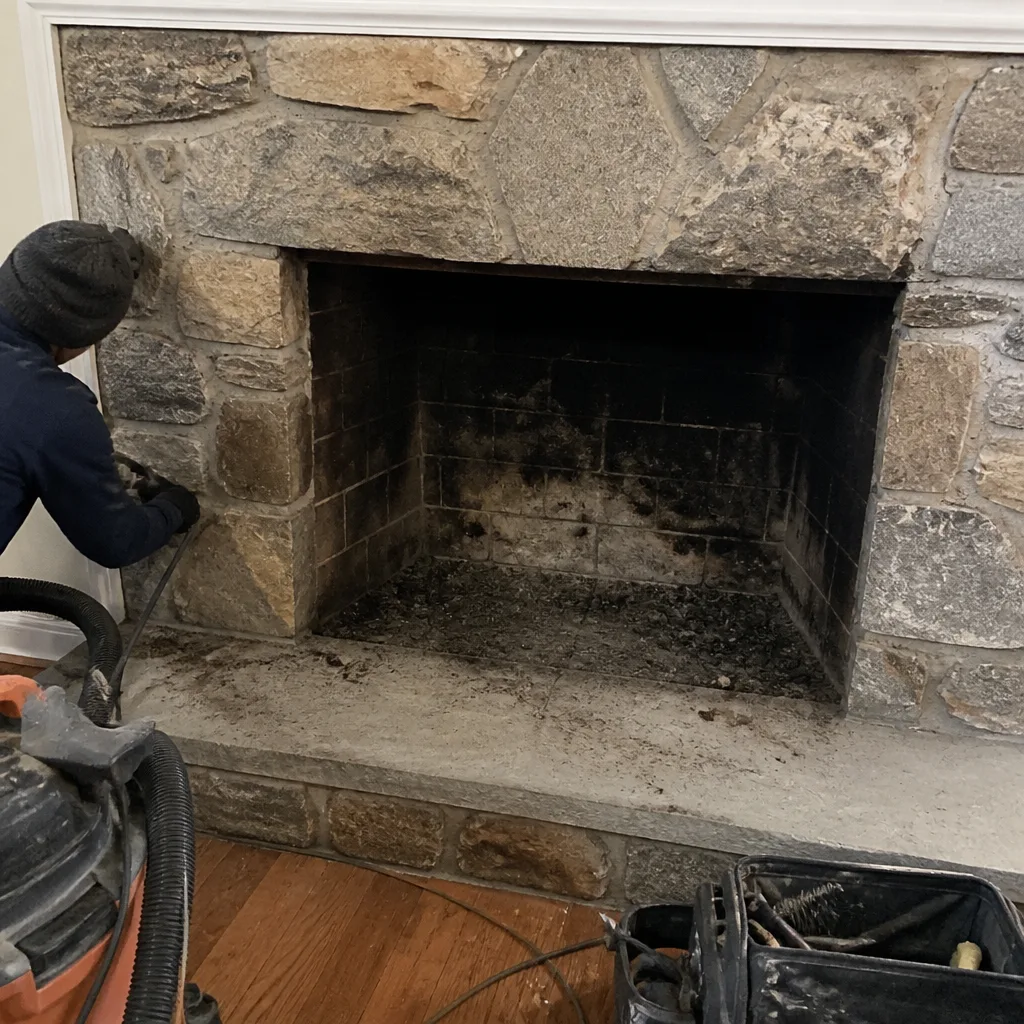 Before
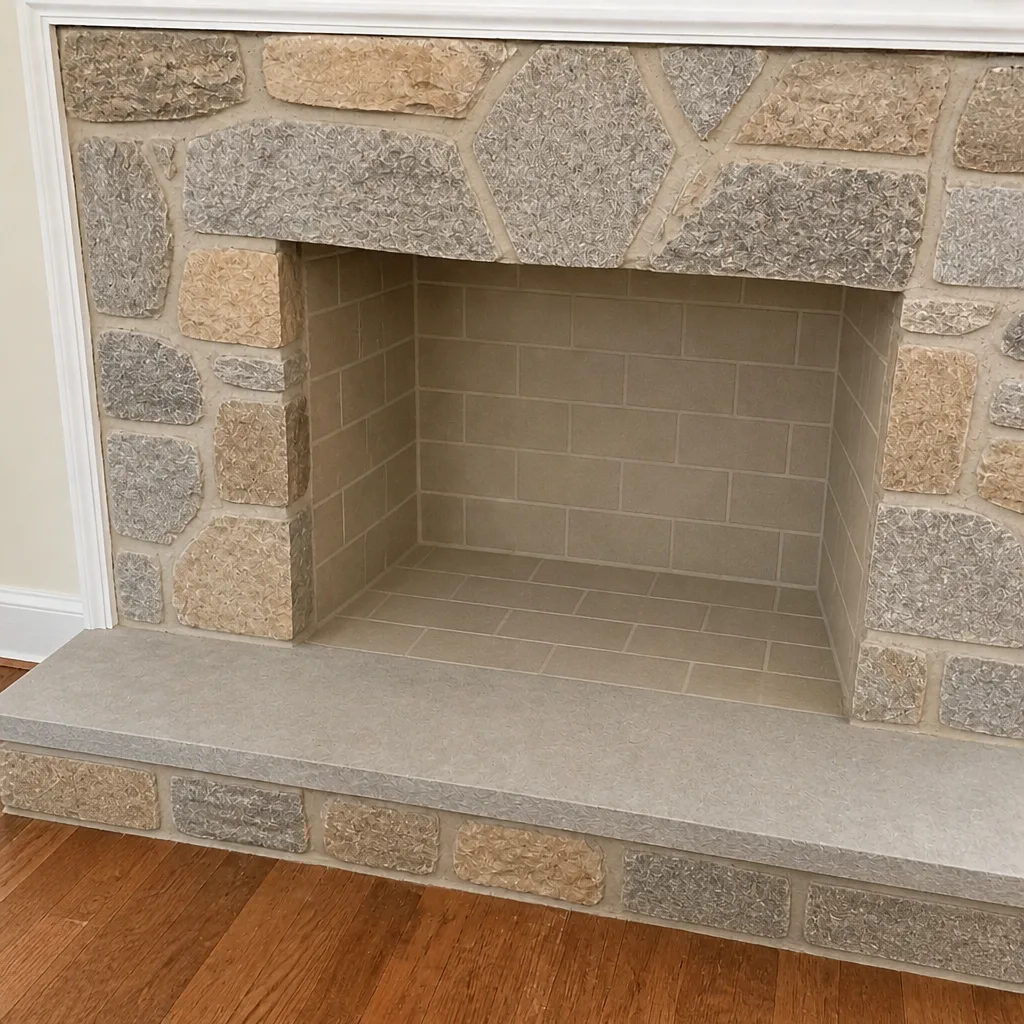 After
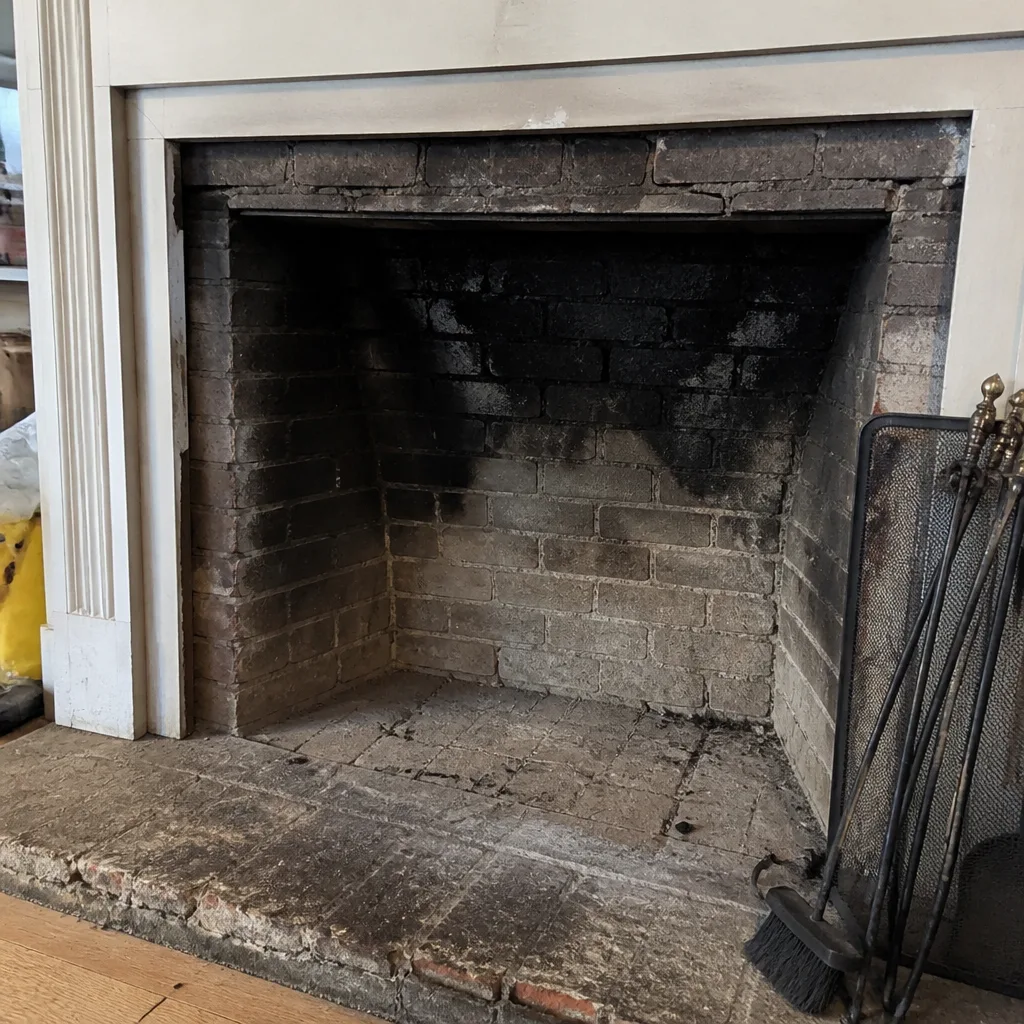 Before
 After
 Before
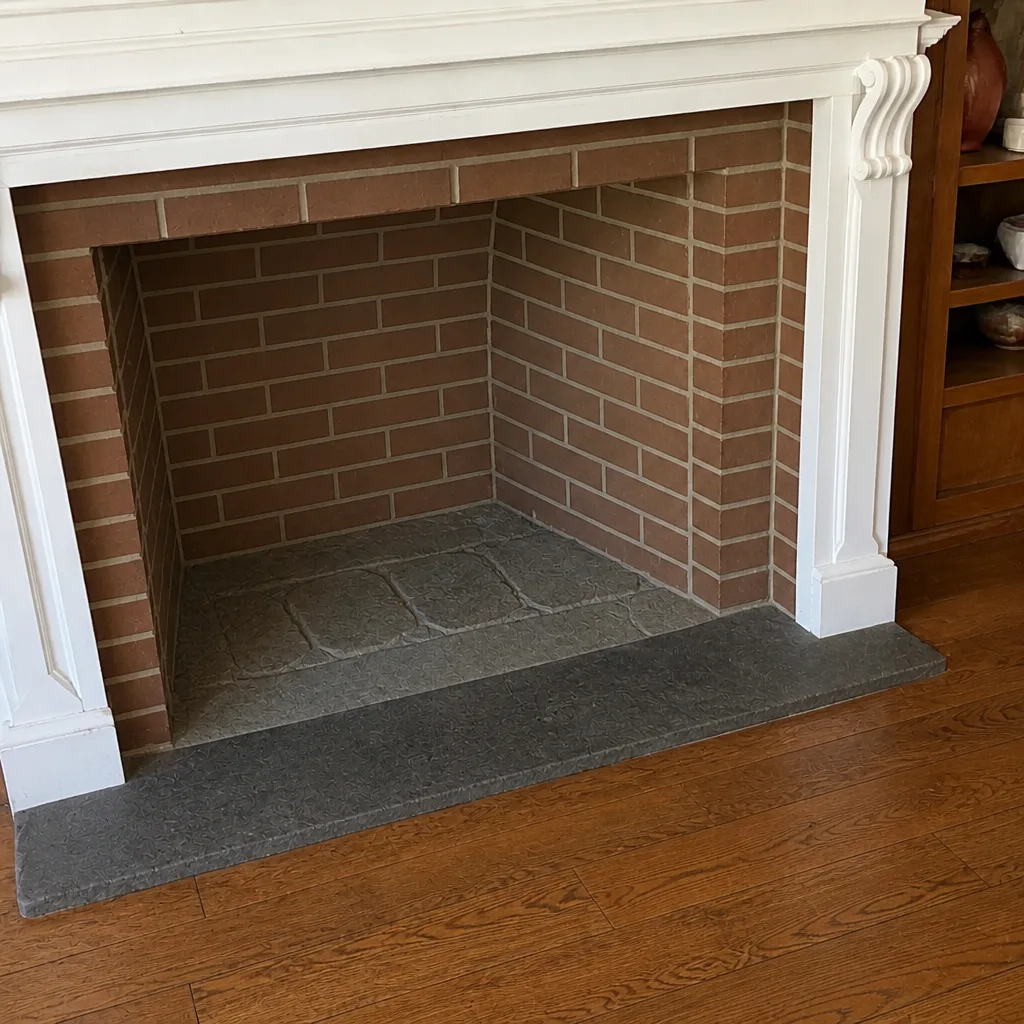 After