
Last updated November 25, 2026
 Sweep & inspection
 Caps & crowns
 Flue relining
 Masonry repair
 Gas fireplace service
Level 1 sweep and inspection to the NFPA 211 annual standard - flue, crown, cap, and flashing checked and photographed
Chimney sweep logs do not sweep chimneys. They loosen some creosote - which then falls where a brush and vacuum still have to collect it.
DIY vs Professional Chimney Cleaning: The Richmond Hill Homeowner’s Decision Guide
A chimney brush cleans soot. It doesn’t tell you that the clay tile behind the soot has a longitudinal crack from last winter’s freeze. That distinction is worth more than the $200 you’d save doing it yourself. Most homeowners in Richmond Hill can physically push a brush through a flue – the question isn’t whether your arms are strong enough, it’s whether the only set of eyes on your chimney knows what a failing liner, a spalled crown, or a misaligned flue connection looks like from the roof. This guide draws that line honestly: what DIY handles well, what it structurally cannot see, and how to decide which side of that line your chimney sits on.
Quick Answer
DIY chimney cleaning is reasonable only for a straight, single-flue wood-burning fireplace with accessible roof access and light creosote – and even then, it cleans the flue without inspecting it. Professional cleaning matters because a sweep is also the only routine moment when someone trained looks at the liner, smoke chamber, crown, and cap. In Richmond Hill’s older housing stock, that inspection is often the more valuable half of the visit.
Styles & brands we work with
- Sweep & inspection
- Caps & crowns
- Flue relining
- Masonry repair
- Gas fireplace service
Table of Contents
- What DIY chimney cleaning actually covers well
- What DIY misses: the parts a brush can’t reach
- Why Richmond Hill’s housing stock raises the stakes
- Equipment reality check: homeowner kits vs. professional gear
- A decision framework: when DIY is reasonable and when it isn’t
- What a professional sweep in Richmond Hill actually includes
- Safety: what you should never do yourself
- Common mistakes to avoid
What DIY chimney cleaning actually covers well
There is a narrow but real set of circumstances where cleaning your own chimney is a sensible, safe choice. We won’t pretend otherwise. If your fireplace matches the profile below and you’re comfortable on a roof, a brush-and-rod kit is a legitimate interim measure between professional visits.
Here’s the profile where DIY is genuinely reasonable:
- A straight, single-flue masonry chimney – no offsets, no bends, no shared flue serving two appliances.
- Wood-burning only – never a chimney serving an oil furnace, gas appliance, or pellet stove, all of which require different inspection and cleaning methods.
- Class 1 creosote only – the light, flaky, soot-like stage that brushes off easily. Stage 2 (tar-like) and Stage 3 (glazed, hardened) creosote require rotary equipment and, often, chemical treatment.
- Safe, stable roof access – a low-pitch roof with proper footing, dry conditions, and no ice or snow.
- An already-inspected, known-condition flue – meaning a professional has looked at it recently and confirmed the liner and structure are sound.
In that scenario, running a brush through from the top down removes the soot load and reduces the immediate creosote layer. It’s not nothing. But it’s a cleaning, not an inspection, and the two are not interchangeable. If your chimney is your primary heat source through a Richmond Hill winter, the cleaning interval matters too: heavy use builds creosote faster than occasional fires, so the schedule shifts with how you actually burn.
What DIY misses: the parts a brush can’t reach
A brush removes what’s on the flue wall. It does not evaluate the flue wall itself. That’s the core of the DIY gap, and it’s the reason a professional sweep is really a cleaning-plus-assessment visit.
Five things a brush cannot check:
- Liner condition. Hairline cracks in clay tile, pitting, gaps at the joints, and separation between tiles are invisible from a brush’s perspective. A camera inspection sees them. A brush does not.
- Smoke chamber parging integrity. The smoke chamber – the sloped transition above the damper – is often parged with mortar that cracks and flakes over time. Rough, deteriorated parging traps creosote and is a known fire pathway.
- Crown and cap assessment from the roof. A cracked crown lets water into the masonry, and water is the number one destroyer of chimneys in this climate. A missing or damaged cap lets rain, animals, and debris in. You can only judge these from the roof, and only if you know what you’re looking at.
- The smoke shelf. The ledge behind the damper collects soot and debris that a straight brush pass often skips. A buildup there affects draft and is a fire hazard in its own right.
- Appliance connection and flue sizing. Is the liner correctly sized for the appliance? Is a furnace or boiler venting into a flue that was never designed for it? These are common in converted homes around Richmond Hill and a brush tells you nothing about them.
This is the honest dividing line. DIY can clean. It cannot verify. And verification is what keeps a chimney safe, not the soot removal alone.
Why Richmond Hill’s housing stock raises the stakes
Richmond Hill is not a subdivision of identical new builds. It’s a neighborhood of detached houses, semis, and attached homes built across several decades, many of them converted, updated, and re-vented over the years. That variety matters for chimney work in ways a generic guide won’t tell you.
Three local realities change the DIY calculus:
- Attached and semi-detached homes. When a chimney is shared or runs alongside a party wall, a compromised liner is not just your problem. Heat and carbon monoxide can migrate through cracks into neighboring units. In attached housing, “I cleaned it myself” skips the check that would catch a liner failure affecting two households, not one.
- Oil-to-gas conversions with undersized flues. Many older Richmond Hill homes were originally heated with oil and later converted. The original chimney and flue sizing may not match the new appliance. A flue that’s too large for a modern gas appliance drafts poorly; one that’s undersized is a venting hazard. This is a sizing and connection question – a camera and a trained eye, not a brush.
- Older clay tile systems. Clay tile liners were standard for decades and they don’t fail gracefully. They crack, spall, and separate at the joints, especially after the freeze-thaw cycles that hit this region every winter. A hairline crack is invisible to a brush but is exactly what lets creosote reach combustible material and what lets carbon monoxide escape the flue.
If your home falls into any of those three groups, the DIY question changes. The soot is the least of your worries. A professional chimney repair evaluation, done with camera inspection, is what tells you whether the flue is actually sound.
Equipment reality check: homeowner kits vs. professional gear
The equipment gap is where the price difference between a hardware-store kit and a professional visit becomes understandable. It’s not that a homeowner brush doesn’t work – it’s that the kit does one job and the professional setup does several, including the one that protects your house.
Here’s what the two setups actually deliver:
- Cleaning method. A homeowner kit is a hand-driven brush on flexible rods. It scrubs the flue wall. Professional rotary cleaning uses a powered spinning brush that follows the flue contours and removes the harder Stage 2 and 3 creosote that a hand brush leaves behind.
- Containment. This is the big one. A homeowner kit does not contain dust – soot and creosote particles end up in the room, on your furniture, in the air. Professional sweeping uses HEPA vacuum containment at the firebox and, in many cases, a sealed flue system, so the debris goes into a vacuum, not into your living room. In a Richmond Hill row house or semi, that matters twice over: the mess doesn’t respect your neighbors’ walls either.
- Inspection tools. A camera. A flashlight that reaches the smoke chamber. A mirror for the crown. The tools that let someone actually see what’s wrong. A homeowner kit has none of these.
- Documentation. A professional visit produces a report with photos – evidence of what was found and what, if anything, needs attention.
We specify professional-trade materials on the repair side too, including Olympia Chimney and DuraFlex – the same products specified by chimney engineers rather than sold in a hardware aisle. The reason is simple: your flue isn’t the place to cut corners on material quality, whether the job is a cleaning or a relining.
A decision framework: when DIY is reasonable and when it isn’t
Here’s the honest framework. It’s a decision tree, not a sales pitch – because in a meaningful number of cases, the right answer for a Richmond Hill homeowner is to call a professional specifically because the DIY cleaning would create a false sense of compliance.
Work through these questions in order:
- Has a professional inspected this chimney within the last year? If no, DIY cleaning is a bad first step. You’re cleaning a flue you haven’t verified is safe. Schedule an inspection first.
- Is your chimney wood-burning only, straight, single-flue, and free of offsets? If no, stop. Gas, oil, and pellet appliance flues, offset flues, and shared flues all require professional cleaning and inspection methods.
- Is your home attached, a semi, or a converted older home with a clay tile liner? If yes, the cost of skipping inspection is higher than the cost of the sweep. DIY cleaning without a camera check leaves the liner unverified.
- Can you safely access the roof in dry, stable conditions? If not, the discussion is over – cleaning from the bottom without proper containment makes a bigger mess and still doesn’t inspect anything.
- Is the creosote light (Stage 1)? If it’s tar-like or glazed, a hand brush won’t remove it and DIY is pointless.
- Only if every answer above points to “safe, verified, accessible, light creosote” is DIY cleaning a reasonable interim measure between professional visits.
If any answer pushes toward “unverified” or “risky,” DIY cleaning makes your chimney look maintained while leaving the actual safety question unanswered. That’s the false compliance trap, and it’s the main reason a chimney sweep by a trained technician is worth the call.
Where DIY fits the schedule, and where it doesn’t
Even in the “DIY is reasonable” case, it doesn’t replace a professional inspection cadence. The honest framing is this: DIY cleaning between professional visits is fine. DIY cleaning instead of professional inspection is where people get into trouble. If your chimney has never been camera-inspected, that’s the first visit – not a round with a brush.
What a professional sweep in Richmond Hill actually includes
A professional chimney cleaning here is a documented process, not a swipe with a brush. That difference is the entire reason the visit is worth scheduling, so it’s fair to know exactly what you’re paying for.
A standard professional visit in Richmond Hill includes the following steps:
- Pre-sweep inspection. A visual assessment of the firebox, damper, smoke chamber, and accessible flue before any cleaning begins – so we know what we’re dealing with.
- HEPA containment setup. Sealing the firebox and running a HEPA vacuum so no soot escapes into your living space.
- Flue cleaning. Rotary or brush cleaning appropriate to the creosote stage and flue type, top-down or bottom-up depending on access and configuration.
- Smoke chamber and smoke shelf cleaning. The parts a straight brush pass misses, cleaned properly.
- Camera inspection when indicated. Especially on older clay tile liners and converted heating systems, a camera check is the only way to see longitudinal cracks and joint separation.
- Roof-level check. Crown, cap, and flashing assessed from the top, since that’s where water damage starts.
- Photo report. Documented findings with photos, so anything recommended is tied to observed conditions – not guesswork.
From that report, the conversation turns to chimney cap & crown condition, liner integrity, and whether anything needs repair now versus next season. We don’t recommend work without showing you what we found, and we say plainly when something can safely wait. For a full rundown of the broader service, our Chimney Sweep Richmond Hill page covers the full scope.
If a repair is warranted, the right fix depends on what the inspection shows. A pitted or cracked flue liner may qualify for HeatShield ceramic resurfacing – a non-invasive restoration method that rebuilds the liner surface without tearing into the chimney. Where the liner is more seriously compromised, a DuraFlex flexible liner system lets us size and route the flue correctly even in irregular older chimneys. Both are professional-trade methods and materials, and both start with the same thing: evidence you can see.
Safety: what you should never do yourself
Some parts of chimney work are not DIY at any comfort level. A brush is safe. Climbing onto a roof in poor conditions is not. Working inside a flue with a camera and looking for carbon monoxide pathways is not a homeowner task, and neither is touching the gas or oil appliance connections that vent into your chimney.
Be clear on the specific hazards:
- Carbon monoxide. A cracked liner or an improperly connected appliance can let CO into your home without any visible sign. This is a colorless, odorless gas, and it’s the reason camera inspection matters on converted and older Richmond Hill systems.
- Chimney fire from creosote. Stage 2 and 3 creosote are the fuel load that turns a routine fire into a chimney fire. A hand brush doesn’t remove it, and a “cleaned” chimney with glazed creosote is still a fire risk.
- Roof height and access. Chimney work happens at height, on roofs that may be pitched, wet, icy, or older than they look. Fall risk is real, and no cleaning is worth an injury.
- Structural masonry. Cracked crowns, spalled brick, and failing mortar aren’t cosmetic. They’re water pathways and, in the worst case, structural concerns – jobs for a trained professional, not a homeowner with a YouTube tutorial.
Our technicians have up to 15 years of experience with exactly these conditions, and we bring the professional equipment – HEPA containment, rotary cleaning, camera inspection, and professional-grade materials from names like Famco and Copperfield – so the work is done right the first time. Safety isn’t the reason to panic. It’s the reason to have the right person look.
Common Mistakes to Avoid
- Treating a DIY cleaning as an inspection. Running a brush through the flue tells you the soot is gone. It tells you nothing about the liner, crown, or smoke chamber. Those are separate checks that require tools and training a brush doesn’t provide.
- Skipping camera inspection on older clay tile. In Richmond Hill’s older homes, a hairline crack in a clay tile is invisible without a camera – and it’s the exact defect that lets heat and CO reach combustible material. If your liner has never been camera-checked, that’s the visit to schedule.
- Cleaning a gas or oil flue like a wood fireplace. Converted heating systems and gas appliances vent differently and need different inspection and cleaning methods. A brush kit built for a wood fireplace is the wrong tool for an appliance flue, and misuse can be dangerous.
- Judging the chimney from the firebox only. The crown and cap are where water gets in, and water is the biggest cause of masonry damage in this climate. You have to look from the roof to know their condition.
- Ignoring the smoke shelf and smoke chamber. These collect soot and debris that a straight pass misses. A chimney that looks “clean” from the fireplace can still have a fire hazard in the smoke chamber.
- Using a homeowner kit without containment in an attached or semi-detached home. Soot doesn’t stay in one unit. HEPA containment protects your living space and your neighbor’s.
- Waiting until there’s a problem. Regular sweeps and inspections catch liner and crown issues while they’re still small repairs. A chimney only gets looked at when it’s already smoking or smelly is a chimney being looked at too late.
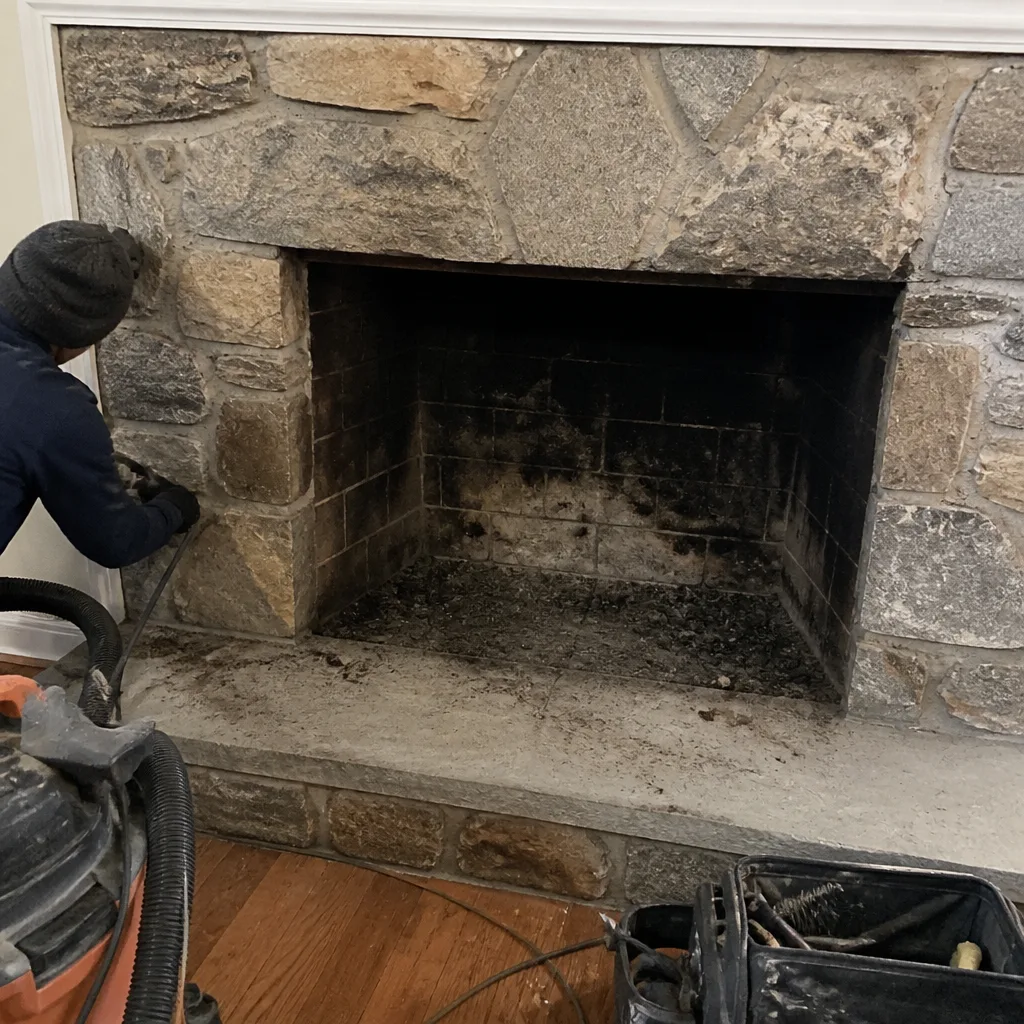
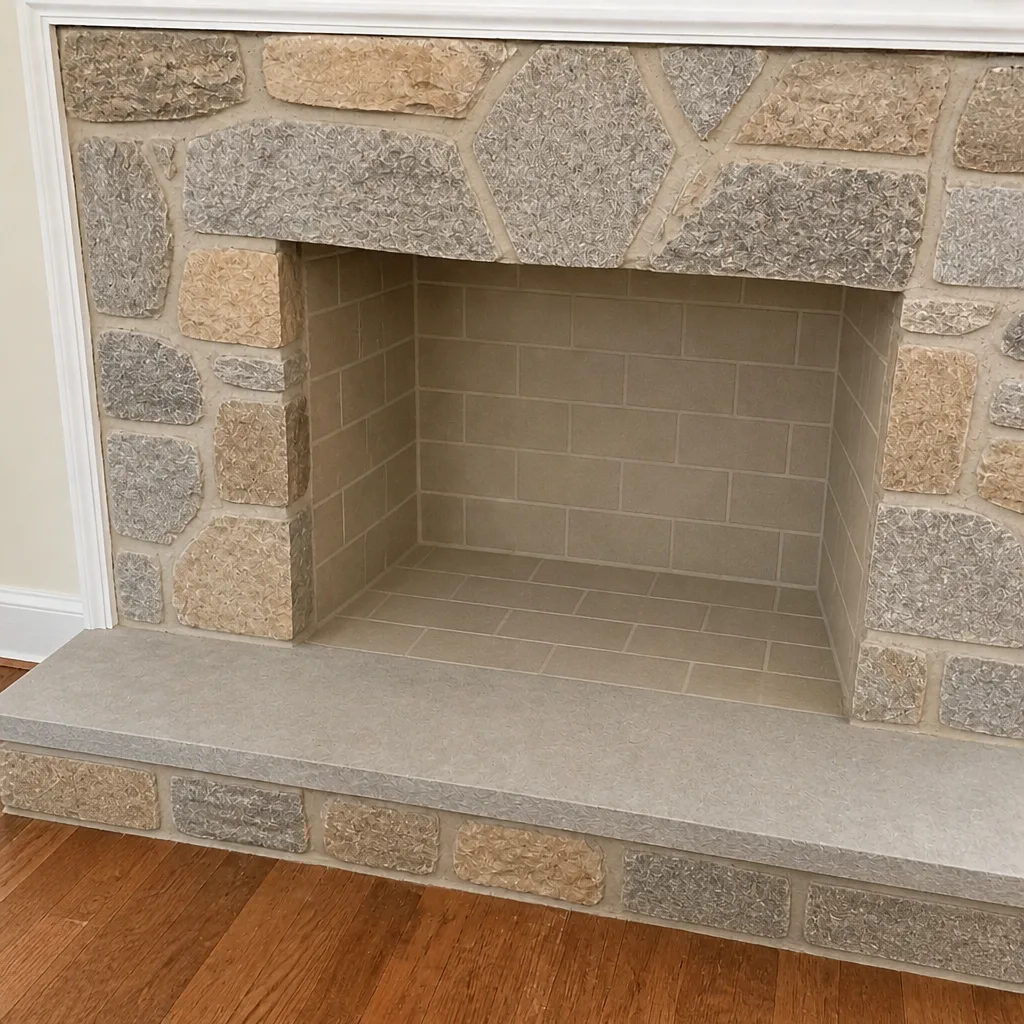
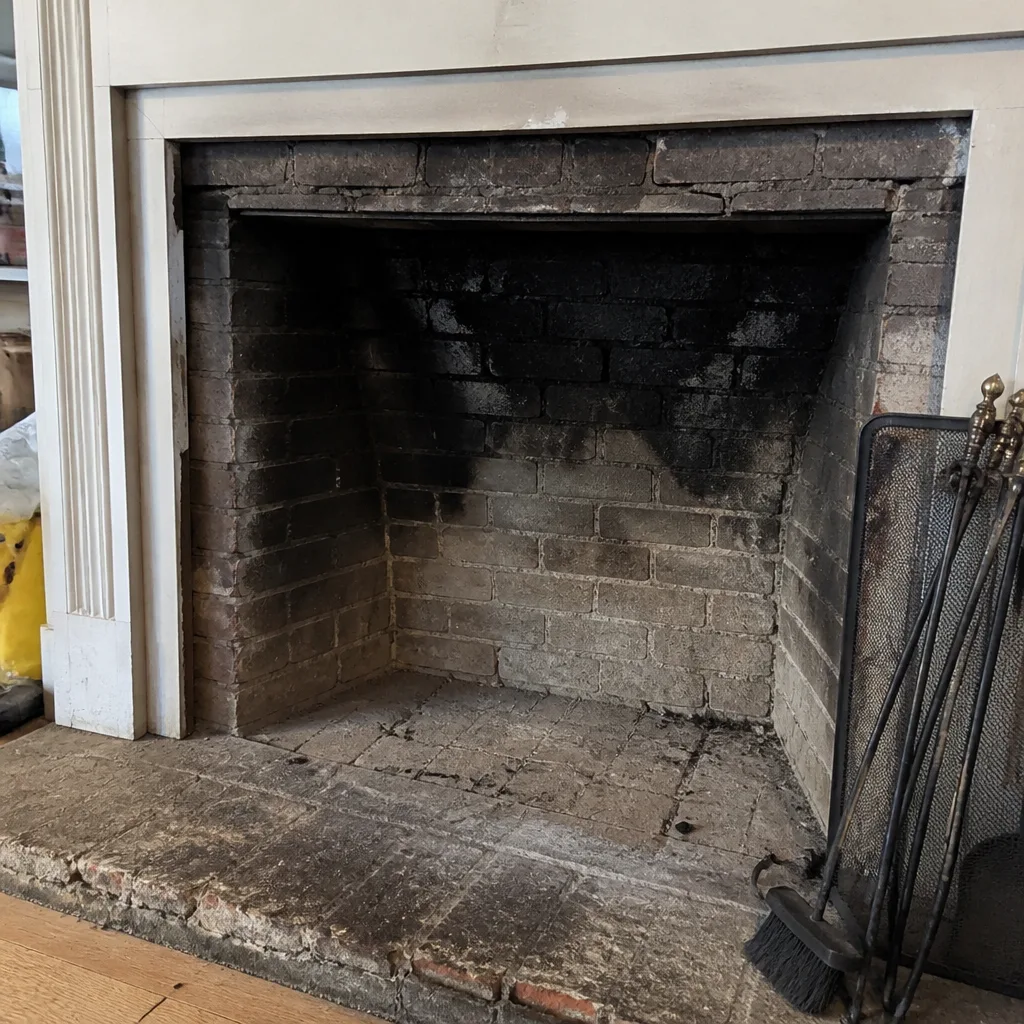
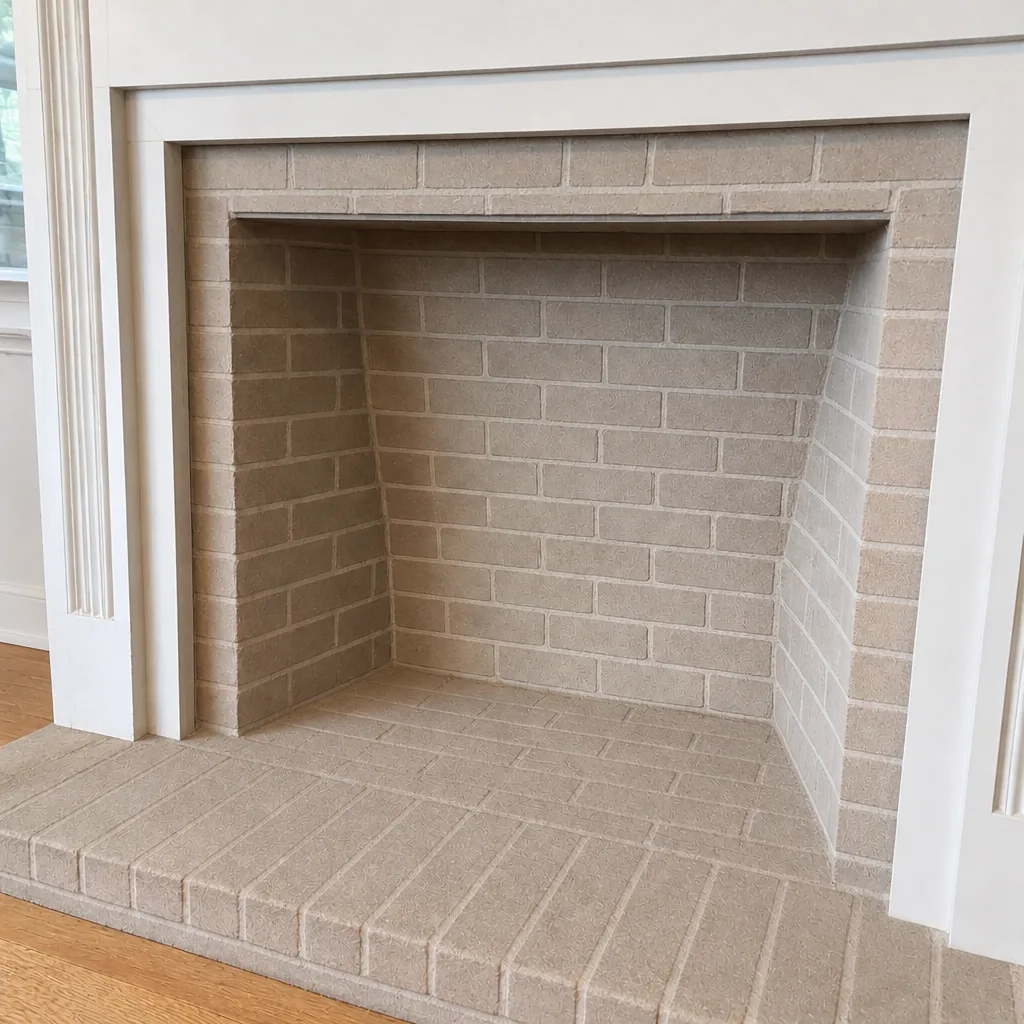
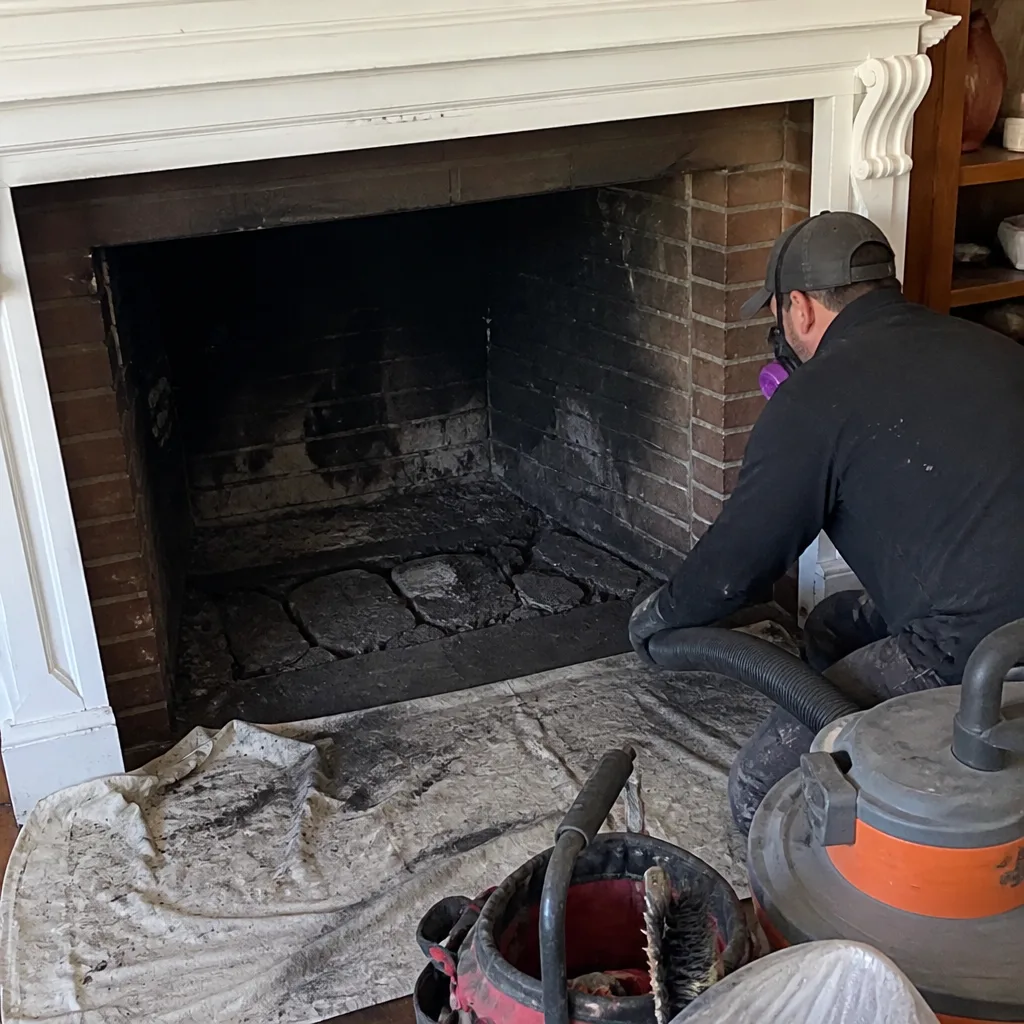
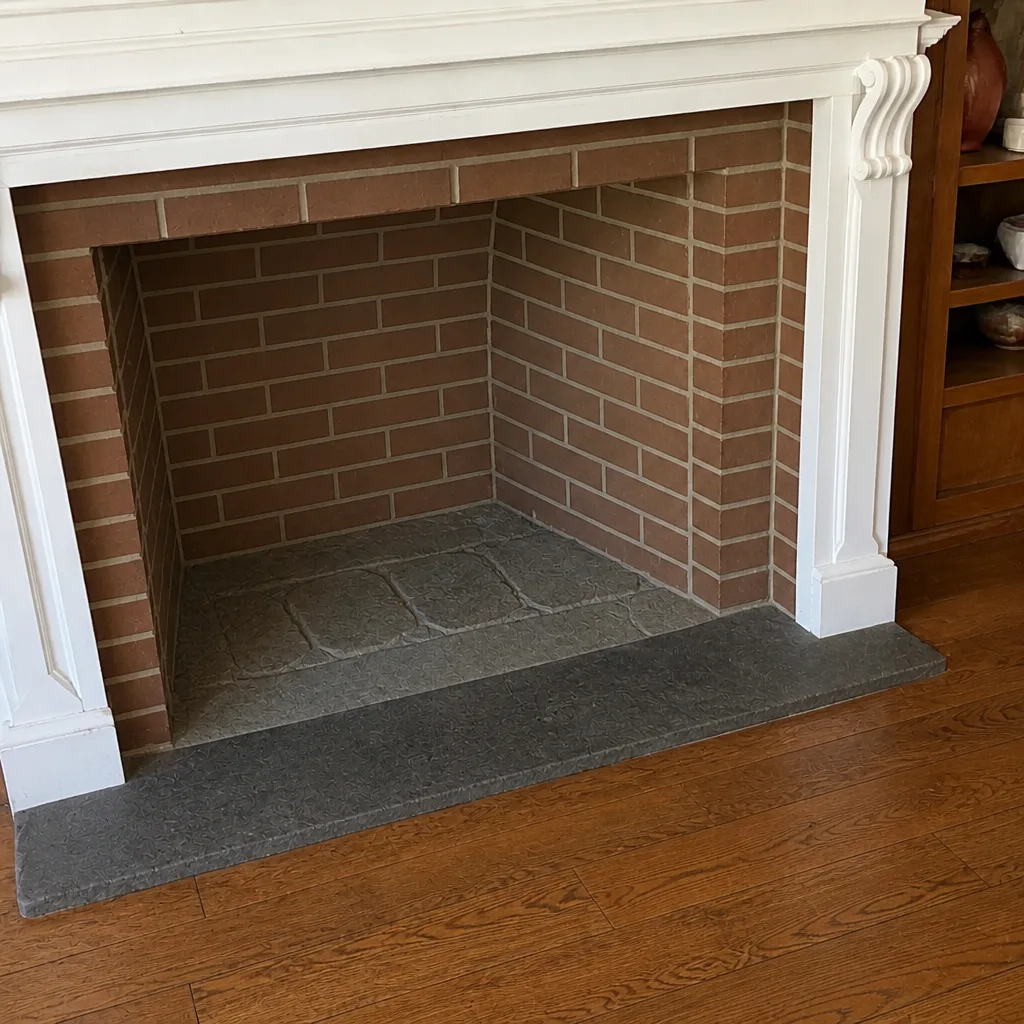
See the difference
 Before
 After
 Before
 After
 Before
 After
When to Call a Professional
Call a professional chimney sweep in Richmond Hill when any of these apply: your chimney has never been camera-inspected; your home is attached, a semi, or an older converted system; you notice smoke backdrafting, a strong creosote smell, or visible masonry cracks; you’ve had a chimney fire (even a small one); your liner is older clay tile; or your creosote is tar-like or glazed rather than light and flaky. In each of those cases, the brush work is the easy part – the inspection is what matters.
Chimney Sweep Richmond Hill offers free estimates in Richmond Hill. Call (888) 846-8349. We answer 24/7. Fast dispatch from 7am to 7pm, Sunday through Friday. The written estimate sets the final price, and nothing is recommended without camera evidence you can see for yourself.
Frequently Asked Questions
It’s safe only in narrow circumstances: a straight, single-flue wood-burning chimney with light creosote, accessible roof access, and a flue a professional has already inspected and confirmed sound. If any of those aren’t true, DIY cleaning leaves the actual safety question unanswered. Call (888) 846-8349 for an inspection – estimates are free.
A DIY cleaning removes soot from the flue wall. A professional sweep cleans and then inspects the liner, smoke chamber, smoke shelf, crown, and cap – with camera and photo documentation. The cleaning is similar; the inspection is what a brush can’t do. Call (888) 846-8349 to book a visit.
If your home is attached, a semi, a converted oil-to-gas system, or has an older clay tile liner, professional cleaning and inspection is the right call. Those housing types are common in Richmond Hill and are where liner cracks and undersized flues hide. Call (888) 846-8349 for a free estimate.
No. Stage 3 glazed creosote is hardened and bonded to the flue wall, and a hand brush won’t remove it. It requires rotary cleaning and, often, chemical treatment. If you’ve seen glazed creosote in your firebox, that’s a professional job. Call (888) 846-8349.
The interval depends on use and fuel: heavy wood burning builds creosote faster than occasional fires, and gas and oil appliances follow a different schedule. In practice, an annual inspection plus a sweep when the inspection shows buildup is the reliable rhythm. Call (888) 846-8349 to schedule yours.
You remove the soot and leave the liner, crown, and appliance connections unverified. A cracked clay tile or a failing crown can go unnoticed for seasons, and those are exactly the conditions that lead to carbon monoxide leaks and chimney fires. That’s the false compliance problem. Call (888) 846-8349 and get the inspection done.
The Bottom Line
DIY chimney cleaning is a reasonable interim measure in one narrow case: a verified, straight, wood-burning flue with light creosote and safe roof access. Everywhere else, it cleans what you can see and skips what you can’t – liner cracks, smoke chamber parging, crown and cap condition, and appliance connections. In Richmond Hill’s older, often attached housing stock, that skipped inspection is the part that matters most. The honest line is simple: DIY can clean a chimney, but only a trained professional can verify it. Chimney Sweep Richmond Hill handles sweeping, inspection, cap and crown work, liner repair, and fireplace repair as one scope. Call (888) 846-8349 for a free estimate.
Written by the team at Chimney Sweep Richmond Hill.